Our Blog

Better Food Traders has been investigating the emission footprint of localised, organic and circular food businesses. We explored how food SMEs can calculate their carbon…
Carbon Accounting for Food SMEs

Luke Neve, North of England Regional Coordinator for Better Food Traders, reflects on his time at the Northern Food and Farming meeting in May 2025. …
Growing Together: Shaping a Northern Agroecological Food Future

Our 12-month support programme for Regional Food Hubs (those focusing on wholesale and distribution support for sustainable farmers and producers, rather than surplus or community…
Regional Food Hubs Programme Update – May 2025

Rebuilding an independent, sustainable food sector Sheffield Friday 13th June 2025 Members, partners and allies of the Better Food Traders network will be meeting in…
Better Food Traders Annual Gathering

As a UK-based Sustainable Food Blogger, I help people make small, practical changes to their eating habits that add up to a big impact. With…
Guest blog – Claire Carter on championing local, sustainable food for a better future
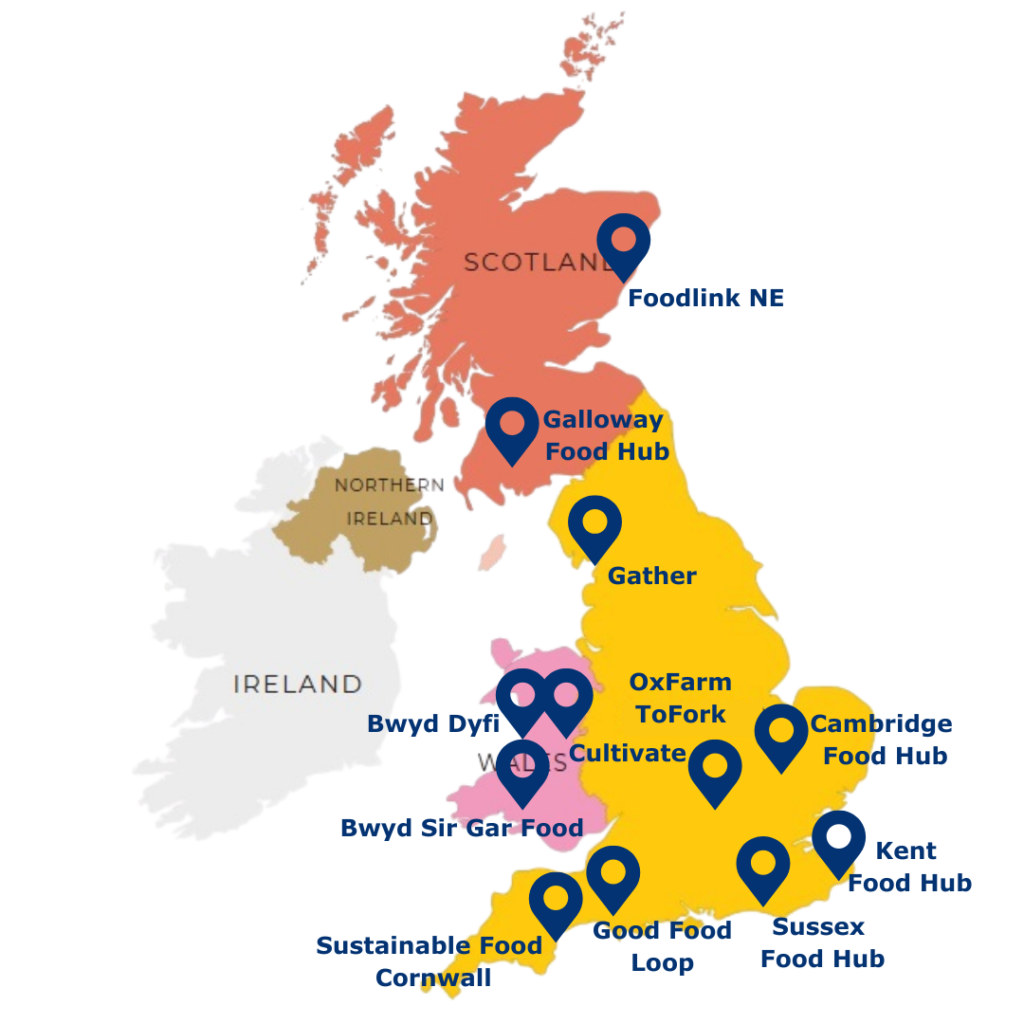
We’re excited to reveal the twelve Regional Food Hubs that will be taking part in our 12-month support programme – run in collaboration with Sustain,…
Regional Food Hubs Support Programme – the 12 hubs revealed!
This year has been a whirlwind of community, sustainability, and food-driven achievements across the Better Food Traders (BFT) network. Here are just a few highlights…
Better Food Traders 2024 Round up

In October, Better Food Traders helped facilitate an engaging and inspiring day bringing together people from across Kent to reimagine a diverse, vibrant and sustainable…
Collective Imagination with Kent Food Partnership
Applications are now open for our innovative new Regional Food Hubs Support Programme. Apply here to be part of our January 2025 cohort! Regional Food…
Regional Food Hubs Support Programme Launched
Contrary to the stereotype of middle-class organic shoppers, the most active organic shoppers are a mixed bunch – and not necessarily the most affluent. 46%…
Who Are Organic Consumers, and What Do They Really Think?