We’ve heard some great news about independent bakeries. If you care about delicious bread that’s good for you, supports farmers and the planet, then read on to find out how to find the best loaf near you!
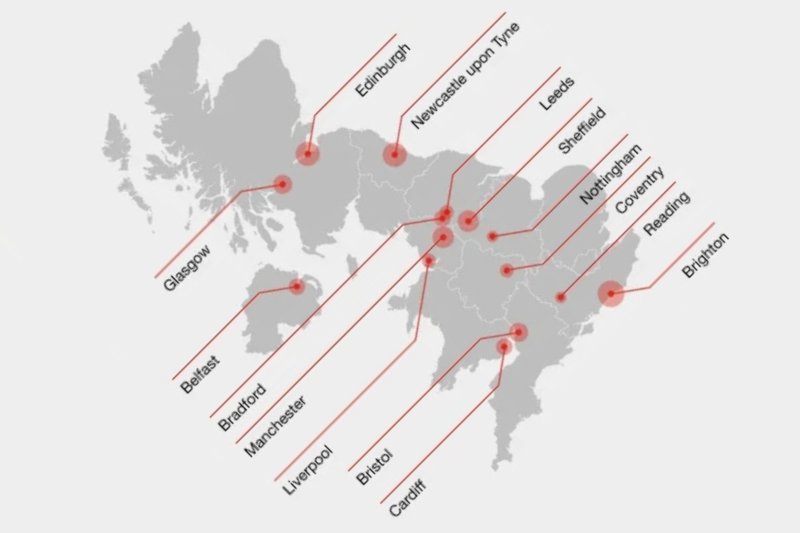
Demand for bakeries in the UK is rising. New research published in September 2026 from Hiscox counted independent bakeries across the country. It put Brighton with the most, with 22 per 100,000 residents, followed by Newcastle and Edinburgh with 16 each.
At Better Food Traders, we represent locally-rooted food businesses that put people and planet first, bakeries among them, so we are delighted to see this trend. However, we also know that not every loaf behind the counter is the same. While these are numbers worth taking notice of, this count of bakeries misses a bigger story about the kind of bread and the types of enterprises that are booming.
The boom is real
Analysis published by insurance broker Hiscox in September found UK Google searches for ‘bakery near me’ had risen 50% year on year, to an average of 368,000 a month. Edinburgh and Brighton also rank first and second for bakery searches per head, which suggests demand is strongest where independent bakeries are already well established. It seems that Britain wants independent bakeries.
One baker interviewed as part of the research, Birgit Gunz of Frankonia Bakery, puts the growth down to people wanting sourdough and ‘real bread’ i.e. no additives. She sees the pull most strongly among people in their twenties and thirties, with health being a driving factor for their purchase behaviour.
All of this deserves a round of tea and toast to celebrate.
Every customer who walks past the supermarket aisle to a local bakery is keeping local jobs and opportunity for community ownership, and keeping money circulating in the local economy.
Not all bread is made equal
However, the Hiscox research is simply counting shopfronts and online searches, not quality of loaves.
Researchers took every business tagged as a bakery on OpenStreetMap and removed the known chains (e.g. Greggs, Gail’s, Wenzel). What remains is a map of where independent bakeries are, with no information about what they bake or what they bake it with.
While independent bakeries all play an important role on our high streets in creating jobs, it isn’t always a promise about quality or ingredients.
The better alternative: meet the Grain Changers.
Baking a Better Tomorrow, a magazine published in February by UK Grain Lab, the Real Bread Campaign and Better Food Traders, follows people changing the whole grain supply chain from seed to loaf.
In Somerset, farmer Fred Price breeds diverse wheat that thrives without agrochemicals. In West Yorkshire, Alex and Hannah Fraser grow organic grain for people, not animal feed. Millers in Nottingham and Hertfordshire stone-grind it, keeping the bran and germ. Bakers such as Henrietta Inman in Suffolk and Kate Marton in Devon turn that flour into wholemeal sourdough with nothing added.
Did you know that just four companies mill 65% of the UK’s flour? A beautiful hand-shaped bakery loaf may well start with the same roller-milled commodity white flour as a factory sliced one. Roller milling strips away a fifth or more of the grain, including the bran and germ where most of the fibre and nutrients sit. The wheat behind this grain usually comes from a farming system built on synthetic nitrogen and fungicides that strips the soil of its health.
Loaves sold unwrapped go home without ingredients lists which leaves us, the customer believing that we’re buying something better than what’s at the supermarket, when this could be no better.
However, the bakeries involved in this type of ‘grain changing’ work are the ones to seek out.
The result tastes better and carries more fibre and micronutrients. The soil is fed, farmers get a fair price, and the baker can tell you where their wheat came from and what’s in their loaves.
How to find real bread
The simplest test for your local bakery is to start asking questions. A baker who is proud of their sourcing will be glad you did.
- Where does your flour come from, and who milled it? Is it organic?
- Is it stoneground? Is any of it wholemeal?
- Do you use any additives, improvers or premixes?
- Is your sourdough made with a live starter only, or is baker’s yeast added?
The Real Bread Map lists places to buy additive-free bread, along with independent mills. Bakeries and mills add their own details, so it is a guide to who has put their hand up, not a complete register. You can download the Baking Better Tomorrow magazine for free on Sustain’s website
Some of those businesses also belong to the regional grain networks now emerging across Britain. In these groups, farmers, millers and bakers grow, mill and bake agroecologically grown grain together. The Britain and Ireland Community Grain Associations map shows where they are, and the two maps overlap.
This is also why Better Food Traders exists. Our members are shops, bakeries, market stalls, food hubs, veg box schemes and local producers across the UK. Each one is committed to nature-friendly farming, good jobs, thriving high streets and bringing you closer to the people who grow and make your food. If a bakery is on our map, it’s a mark of quality assurance that you can count on.
So we’re here for the bakery boom. But let’s ensure we’re championing those who are baking for a better tomorrow, for people and planet.


